The complete guide to recycling espresso grounds: sustainable ways to reuse your coffee waste. The complete guide to recycling espresso grounds: sustainable ways to reuse your coffee waste. How tos
How tos

The complete guide to recycling espresso grounds: sustainable ways to reuse your coffee waste.

Pact Coffee

Written by Pact Coffee / Views

Published - 29 July 2024 / Updated - 16 June 2026

Key takeaways

  • Spent espresso grounds retain nitrogen, potassium, and magnesium even after extraction – making them genuinely useful for gardens, skincare, and home deodorising, rather than landfill.
  • Used coffee grounds are close to pH-neutral. The acids that make fresh coffee acidic are extracted into the cup during brewing, not left behind in the puck.
  • Don’t add wet grounds directly to soil – their residual caffeine can inhibit plant growth. Add them to a compost heap instead, mixed with carbon-rich material in a roughly 1:2 ratio.
  • Dry your grounds thoroughly before using them in skincare or as a deodoriser. Wet grounds stored in a sealed container will develop mold within days.
  • Ground espresso has a finer, denser particle structure than filter grounds, which makes spent espresso pucks particularly effective for composting, exfoliating, and absorbing odours.

Every morning, a ritual plays out in kitchens across the UK. The machine runs, the shot pulls, the cup fills. And then, the spent puck gets knocked into the bin.

It’s an easy habit to fall into. But it’s worth pausing for a moment, because what’s left in that portafilter after extraction isn’t waste in the conventional sense. Spent espresso grounds still contain nitrogen, potassium, magnesium, and a range of organic compounds that have real and practical uses – in the garden, in a skincare routine, and around the kitchen.

When organic material, like coffee grounds, ends up in general waste and gets buried in landfill without access to oxygen, it breaks down anaerobically, producing methane – a greenhouse gas considerably more potent than CO2. Diverting grounds from that fate doesn’t require much effort. It just requires knowing what to do with them.

Here’s everything worth knowing about how to recycle coffee grounds, and why it’s easier than most people expect.

What is the difference between filter coffee grounds and espresso grounds?

Before getting into the practical uses, it helps to understand what makes ground espresso different from the waste left by a filter brew – because the physical structure of the material affects how well each method works.

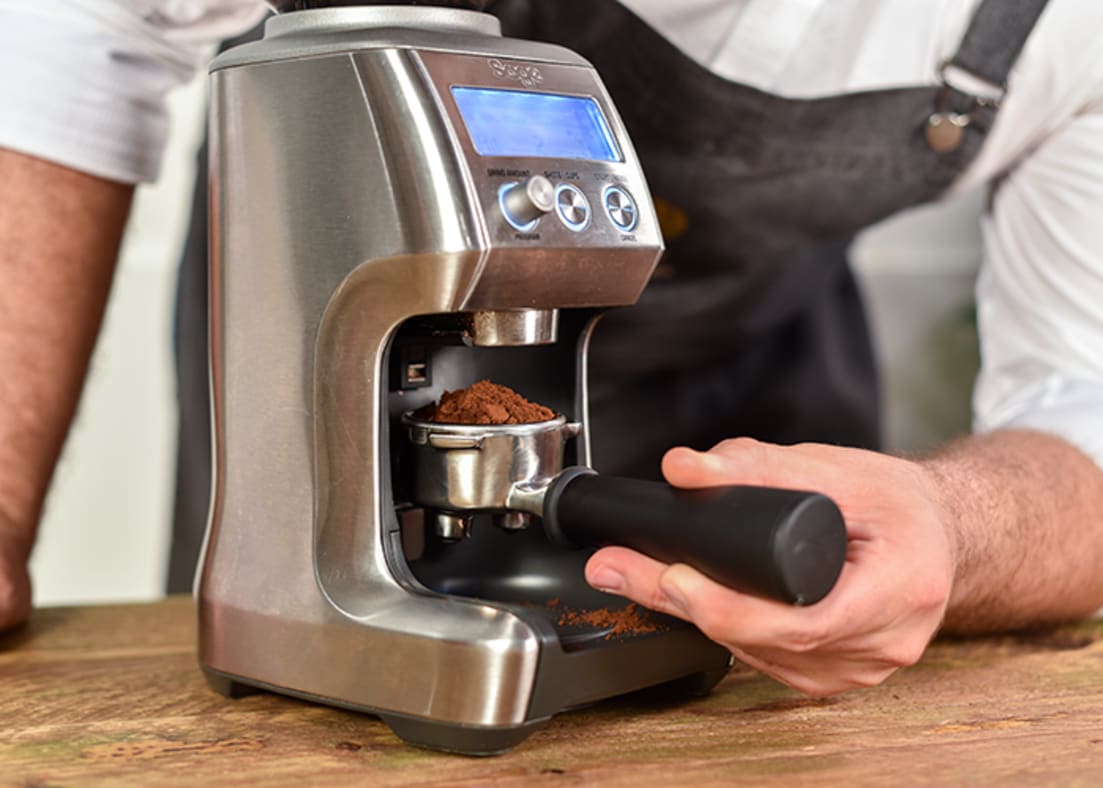
Espresso uses an exceptionally fine grind, calibrated to create even resistance against high-pressure water extraction. When that fine ground espresso is packed into a portafilter and nine bars of pressure are applied, it forms a tightly compressed puck. The pressure extracts the soluble oils and sugars into the shot, but leaves behind the structural cellulose, insoluble fibre, and bound nitrogen.

Because espresso is ground so finely, the total surface area of the spent material is considerably larger than that of coarser filter grounds. That vast surface area is what makes spent espresso pucks particularly effective at absorbing odours, exfoliating skin gently, and breaking down quickly in a compost heap.

Filter grounds work well for all the same purposes – they’re just slightly less concentrated in their effect.

Grinding for espresso

How to reuse coffee grounds in the garden.

Composting is the most straightforward way to recycle coffee grounds – and the most beneficial for the environment. But there’s one common mistake worth avoiding first.

Tipping wet, fresh grounds directly onto soil or around the base of plants isn’t always a good idea. Fresh grounds retain trace amounts of residual caffeine, which the coffee plant uses naturally as a growth inhibitor to suppress competing root systems nearby.

Applied in quantity directly to soil, wet grounds can also form a hydrophobic layer that blocks water from penetrating to the roots beneath.

The better approach is the compost heap.

In composting terms, coffee grounds are classified as a green – a nitrogen-rich material, despite their brown colour. To create the right biological balance, mix your spent grounds with carbon-rich brown materials like dry autumn leaves, shredded cardboard, or straw in a roughly 1:2 ratio (grounds to brown material).

The microorganisms and earthworms in a well-managed compost heap thrive on this combination. The grounds speed up decomposition, helping the pile maintain the internal temperature needed to break material down into rich, nutrient-dense humus.

One more thing worth knowing: used coffee grounds are virtually pH-neutral. The acids that make fresh coffee acidic are water-soluble and extracted into the cup during brewing. What’s left in the puck is close to neutral, which means there’s no risk of acidifying your soil by composting grounds regularly.

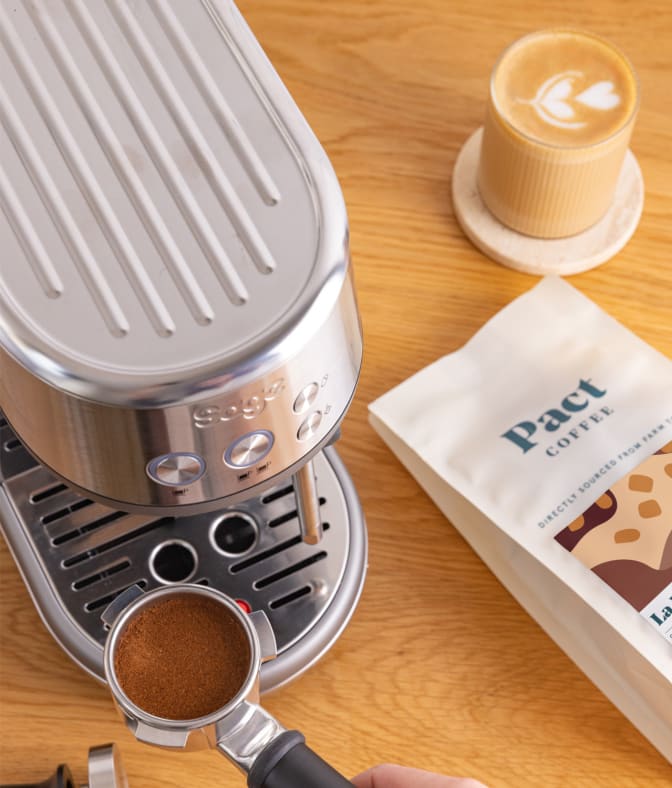
Coffee fine-ground for espresso

How to reuse coffee grounds as a body scrub.

The fine, uniform texture of spent espresso grounds makes them a genuinely effective exfoliant – gentle enough for regular use, and free from the synthetic microplastics found in many commercial scrubs.

Spent grounds also contain topical antioxidants and ferulic acid, which help protect skin cells against environmental stressors. The physical action of the grind polishes away dead skin cells without the micro-tears that harsher exfoliants can cause.

Before using grounds on skin, they need to be completely dry. Spread the spent puck thinly on a baking sheet and leave it somewhere well-ventilated until all the moisture has gone. This step matters – wet grounds stored in a sealed jar will develop mold within a few days.

A simple coffee ground body scrub:

  • One cup of bone-dry espresso grounds.
  • Half a cup of melted coconut oil or sweet almond oil.
  • Half a cup of fine brown sugar or pink Himalayan salt.
  • Five to ten drops of essential oil: sweet orange, peppermint, or rosemary all work well.

Combine the dry grounds with the oil in a bowl, then mix in the sugar or salt and the essential oil until everything is evenly combined.

Massage onto skin in gentle circular motions before rinsing with warm water. Store any leftovers in a sealed jar in a cool, dry place and use within two weeks.

How to prepare ground coffee waste as a natural deodoriser.

Coffee is highly porous. During roasting, millions of microscopic pockets form within the bean’s cellular structure – the same property that causes fresh coffee to absorb surrounding odours so readily when left unsealed in a kitchen. Spent grounds retain this porosity, and you can put it to work.

Dry grounds contain a high concentration of nitrogen, which interacts with carbon compounds in the air to neutralise volatile sulphurous odours, rather than simply masking them.

To use as a fridge or cupboard deodoriser:

Dry your spent espresso puck thoroughly on a flat tray. Once completely dry, pour the grounds into an open jar, small ramekin, or breathable mesh sachet and place it at the back of the fridge, inside a cupboard, or in a shoe storage area. Replace the grounds every two to three weeks.

For hands after cooking:

Keep a small bowl of dry grounds next to the kitchen sink. After chopping garlic, dicing onions, or handling fish, rub a tablespoon of grounds between your palms with a splash of warm water and rinse. The grounds scrub away the residual oils mechanically while neutralising the smell – more effectively, in most cases, than soap alone.

How to make recycling coffee grounds a habit.

The practical challenge isn’t just knowing what to do with spent grounds, but also making sure they don’t end up in the bin before you get around to using them.

The simplest fix is a small countertop caddy with a lid, placed next to the espresso machine or knock-box. It keeps the grounds separate from general food waste, uncontaminated, and ready to use.

Empty it into the compost heap every few days, or set aside a portion for drying when you want to use them for skincare or deodorising.

If your household produces more grounds than your garden or routine can absorb, local allotments, community gardens, and urban farming collectives are often happy to take clean bulk donations for large-scale composting.

A quick search for composting initiatives in your area will usually turn up somewhere that can use them.

Fine espresso grounds

The coffee behind the routine.

Sustainability in coffee starts long before the grounds hit the counter. It begins with how the coffee is grown, who grows it, and whether the price paid for it reflects the quality of their work.

At Pact, we form long-term relationships with the world’s best growers. Because we work directly with them, and skip the traditional, convoluted supply chain, we know it’s 100% sustainably grown.

Start a Pact subscription and get 25% off your first two orders.

FAQs

Are coffee grounds good for the garden?

Yes, but with one important caveat: don’t add wet, fresh grounds directly to soil. The residual caffeine can inhibit plant growth, and a thick layer of wet grounds can form a water-resistant barrier. 

Add them to a compost heap instead, mixed with carbon-rich brown materials, like cardboard or dry leaves, in a 1:2 ratio. Composted grounds break down into nutrient-rich humus that’s genuinely beneficial for soil health.

Are used coffee grounds acidic?

No. Fresh coffee is acidic, but the water-soluble acids extract into the brewed cup during brewing. Spent grounds are almost pH-neutral, which means composting them regularly won’t acidify your soil.

Can I reuse coffee grounds on my skin?

Yes. Dried espresso grounds make an effective natural exfoliant. The fine, uniform particle size gently removes dead skin cells without the micro-tears caused by harsher scrubs, and spent grounds contain antioxidants that may offer some topical benefit. 

Always dry the grounds completely before use to prevent mold, and combine with a carrier oil, like coconut or almond oil, for a simple body scrub.

How do I use coffee grounds to remove smells?

Dry your spent grounds thoroughly, then place them in an open container in the fridge, a cupboard, or a shoe storage area. 

The nitrogen in the grounds neutralises volatile sulphurous odours, rather than masking them. Replace every two to three weeks. Dry grounds kept by the kitchen sink also work well for removing garlic, onion, and fish smells from hands after cooking.

What is the difference between espresso grounds and filter coffee grounds for reuse?

Both work well for composting, skincare, and deodorising. Espresso is ground more finely than filter coffee, which gives it a larger total surface area, making spent espresso pucks particularly effective at absorbing odours and exfoliating gently. 

Filter grounds work for the same purposes, just with a slightly less concentrated effect.

How should I collect and store coffee grounds for reuse?

A small countertop caddy with a lid, placed next to your machine or knock-box, is the most practical solution. 

It keeps grounds separate from general food waste and uncontaminated. For skincare or deodorising use, spread the grounds on a flat tray and allow them to dry completely in a well-ventilated space before storing in a sealed jar. Use within two weeks once dried.

Looking for a coffee worth brewing (and composting!) every morning? Find Pact’s Colombia Single Origin in the coffee aisle at Waitrose, or explore the full range at pactcoffee.com.

The complete guide to recycling espresso grounds: sustainable ways to reuse your coffee waste.

Pact Coffee

Written by Pact Coffee

Views

Published - 29 July 2024

Updated - 16 June 2026

Key takeaways

  • Spent espresso grounds retain nitrogen, potassium, and magnesium even after extraction – making them genuinely useful for gardens, skincare, and home deodorising, rather than landfill.
  • Used coffee grounds are close to pH-neutral. The acids that make fresh coffee acidic are extracted into the cup during brewing, not left behind in the puck.
  • Don’t add wet grounds directly to soil – their residual caffeine can inhibit plant growth. Add them to a compost heap instead, mixed with carbon-rich material in a roughly 1:2 ratio.
  • Dry your grounds thoroughly before using them in skincare or as a deodoriser. Wet grounds stored in a sealed container will develop mold within days.
  • Ground espresso has a finer, denser particle structure than filter grounds, which makes spent espresso pucks particularly effective for composting, exfoliating, and absorbing odours.

Every morning, a ritual plays out in kitchens across the UK. The machine runs, the shot pulls, the cup fills. And then, the spent puck gets knocked into the bin.

It’s an easy habit to fall into. But it’s worth pausing for a moment, because what’s left in that portafilter after extraction isn’t waste in the conventional sense. Spent espresso grounds still contain nitrogen, potassium, magnesium, and a range of organic compounds that have real and practical uses – in the garden, in a skincare routine, and around the kitchen.

When organic material, like coffee grounds, ends up in general waste and gets buried in landfill without access to oxygen, it breaks down anaerobically, producing methane – a greenhouse gas considerably more potent than CO2. Diverting grounds from that fate doesn’t require much effort. It just requires knowing what to do with them.

Here’s everything worth knowing about how to recycle coffee grounds, and why it’s easier than most people expect.

What is the difference between filter coffee grounds and espresso grounds?

Before getting into the practical uses, it helps to understand what makes ground espresso different from the waste left by a filter brew – because the physical structure of the material affects how well each method works.

Espresso uses an exceptionally fine grind, calibrated to create even resistance against high-pressure water extraction. When that fine ground espresso is packed into a portafilter and nine bars of pressure are applied, it forms a tightly compressed puck. The pressure extracts the soluble oils and sugars into the shot, but leaves behind the structural cellulose, insoluble fibre, and bound nitrogen.

Because espresso is ground so finely, the total surface area of the spent material is considerably larger than that of coarser filter grounds. That vast surface area is what makes spent espresso pucks particularly effective at absorbing odours, exfoliating skin gently, and breaking down quickly in a compost heap.

Filter grounds work well for all the same purposes – they’re just slightly less concentrated in their effect.

Grinding for espresso

How to reuse coffee grounds in the garden.

Composting is the most straightforward way to recycle coffee grounds – and the most beneficial for the environment. But there’s one common mistake worth avoiding first.

Tipping wet, fresh grounds directly onto soil or around the base of plants isn’t always a good idea. Fresh grounds retain trace amounts of residual caffeine, which the coffee plant uses naturally as a growth inhibitor to suppress competing root systems nearby.

Applied in quantity directly to soil, wet grounds can also form a hydrophobic layer that blocks water from penetrating to the roots beneath.

The better approach is the compost heap.

In composting terms, coffee grounds are classified as a green – a nitrogen-rich material, despite their brown colour. To create the right biological balance, mix your spent grounds with carbon-rich brown materials like dry autumn leaves, shredded cardboard, or straw in a roughly 1:2 ratio (grounds to brown material).

The microorganisms and earthworms in a well-managed compost heap thrive on this combination. The grounds speed up decomposition, helping the pile maintain the internal temperature needed to break material down into rich, nutrient-dense humus.

One more thing worth knowing: used coffee grounds are virtually pH-neutral. The acids that make fresh coffee acidic are water-soluble and extracted into the cup during brewing. What’s left in the puck is close to neutral, which means there’s no risk of acidifying your soil by composting grounds regularly.

Coffee fine-ground for espresso

How to reuse coffee grounds as a body scrub.

The fine, uniform texture of spent espresso grounds makes them a genuinely effective exfoliant – gentle enough for regular use, and free from the synthetic microplastics found in many commercial scrubs.

Spent grounds also contain topical antioxidants and ferulic acid, which help protect skin cells against environmental stressors. The physical action of the grind polishes away dead skin cells without the micro-tears that harsher exfoliants can cause.

Before using grounds on skin, they need to be completely dry. Spread the spent puck thinly on a baking sheet and leave it somewhere well-ventilated until all the moisture has gone. This step matters – wet grounds stored in a sealed jar will develop mold within a few days.

A simple coffee ground body scrub:

  • One cup of bone-dry espresso grounds.
  • Half a cup of melted coconut oil or sweet almond oil.
  • Half a cup of fine brown sugar or pink Himalayan salt.
  • Five to ten drops of essential oil: sweet orange, peppermint, or rosemary all work well.

Combine the dry grounds with the oil in a bowl, then mix in the sugar or salt and the essential oil until everything is evenly combined.

Massage onto skin in gentle circular motions before rinsing with warm water. Store any leftovers in a sealed jar in a cool, dry place and use within two weeks.

How to prepare ground coffee waste as a natural deodoriser.

Coffee is highly porous. During roasting, millions of microscopic pockets form within the bean’s cellular structure – the same property that causes fresh coffee to absorb surrounding odours so readily when left unsealed in a kitchen. Spent grounds retain this porosity, and you can put it to work.

Dry grounds contain a high concentration of nitrogen, which interacts with carbon compounds in the air to neutralise volatile sulphurous odours, rather than simply masking them.

To use as a fridge or cupboard deodoriser:

Dry your spent espresso puck thoroughly on a flat tray. Once completely dry, pour the grounds into an open jar, small ramekin, or breathable mesh sachet and place it at the back of the fridge, inside a cupboard, or in a shoe storage area. Replace the grounds every two to three weeks.

For hands after cooking:

Keep a small bowl of dry grounds next to the kitchen sink. After chopping garlic, dicing onions, or handling fish, rub a tablespoon of grounds between your palms with a splash of warm water and rinse. The grounds scrub away the residual oils mechanically while neutralising the smell – more effectively, in most cases, than soap alone.

How to make recycling coffee grounds a habit.

The practical challenge isn’t just knowing what to do with spent grounds, but also making sure they don’t end up in the bin before you get around to using them.

The simplest fix is a small countertop caddy with a lid, placed next to the espresso machine or knock-box. It keeps the grounds separate from general food waste, uncontaminated, and ready to use.

Empty it into the compost heap every few days, or set aside a portion for drying when you want to use them for skincare or deodorising.

If your household produces more grounds than your garden or routine can absorb, local allotments, community gardens, and urban farming collectives are often happy to take clean bulk donations for large-scale composting.

A quick search for composting initiatives in your area will usually turn up somewhere that can use them.

Fine espresso grounds

The coffee behind the routine.

Sustainability in coffee starts long before the grounds hit the counter. It begins with how the coffee is grown, who grows it, and whether the price paid for it reflects the quality of their work.

At Pact, we form long-term relationships with the world’s best growers. Because we work directly with them, and skip the traditional, convoluted supply chain, we know it’s 100% sustainably grown.

Start a Pact subscription and get 25% off your first two orders.

FAQs

Are coffee grounds good for the garden?

Yes, but with one important caveat: don’t add wet, fresh grounds directly to soil. The residual caffeine can inhibit plant growth, and a thick layer of wet grounds can form a water-resistant barrier. 

Add them to a compost heap instead, mixed with carbon-rich brown materials, like cardboard or dry leaves, in a 1:2 ratio. Composted grounds break down into nutrient-rich humus that’s genuinely beneficial for soil health.

Are used coffee grounds acidic?

No. Fresh coffee is acidic, but the water-soluble acids extract into the brewed cup during brewing. Spent grounds are almost pH-neutral, which means composting them regularly won’t acidify your soil.

Can I reuse coffee grounds on my skin?

Yes. Dried espresso grounds make an effective natural exfoliant. The fine, uniform particle size gently removes dead skin cells without the micro-tears caused by harsher scrubs, and spent grounds contain antioxidants that may offer some topical benefit. 

Always dry the grounds completely before use to prevent mold, and combine with a carrier oil, like coconut or almond oil, for a simple body scrub.

How do I use coffee grounds to remove smells?

Dry your spent grounds thoroughly, then place them in an open container in the fridge, a cupboard, or a shoe storage area. 

The nitrogen in the grounds neutralises volatile sulphurous odours, rather than masking them. Replace every two to three weeks. Dry grounds kept by the kitchen sink also work well for removing garlic, onion, and fish smells from hands after cooking.

What is the difference between espresso grounds and filter coffee grounds for reuse?

Both work well for composting, skincare, and deodorising. Espresso is ground more finely than filter coffee, which gives it a larger total surface area, making spent espresso pucks particularly effective at absorbing odours and exfoliating gently. 

Filter grounds work for the same purposes, just with a slightly less concentrated effect.

How should I collect and store coffee grounds for reuse?

A small countertop caddy with a lid, placed next to your machine or knock-box, is the most practical solution. 

It keeps grounds separate from general food waste and uncontaminated. For skincare or deodorising use, spread the grounds on a flat tray and allow them to dry completely in a well-ventilated space before storing in a sealed jar. Use within two weeks once dried.

Looking for a coffee worth brewing (and composting!) every morning? Find Pact’s Colombia Single Origin in the coffee aisle at Waitrose, or explore the full range at pactcoffee.com.